
Veteran Indian cricketers KL Rahul, Mohammed Siraj, and Devdutt Padikkal have been asked to play in the Duleep Trophy final for South Zone against East Zone. The participation of other T20I players like Tilak Varma, Vaibhav Sooryavanshi, and Ishan Kishan depends on Team India head coach Gautam Gambhir's approval. Additionally, chief selector Ajit Agarkar will attend the final, and the BCCI is arranging visas for net bowlers for the Asian Games.

Indian benchmark indices Sensex and Nifty closed largely flat on Monday, recovering from early losses, as escalating tensions in West Asia and a sharp rally in crude oil prices weighed on investor sentiment, despite resilience in IT and consumer durables stocks.

Afghanistan-Sri Lanka white-ball series likely to be postponed indefinitely as West Asia conflict deepens

Suryakumar Yadav and Shubman Gill are missing from the list of probables for the Asian Games, while Vaibhav Sooryavanshi has been included in the 30-member squad submitted by the BCCI to the IOA.

Indian stock market benchmark indices Sensex and Nifty recorded their second consecutive day of decline, with the Sensex dropping 555.23 points and the Nifty falling 144.05 points, primarily due to rising crude oil prices and ongoing US-Iran hostilities in West Asia.

Pakistan's cricket selectors have opted for a significantly revamped pace attack for the upcoming two-Test series against the West Indies. Key players like Shaheen Shah Afridi, Hasan Ali, Naseem Shah, and veteran spinner Nauman Ali have been dropped, making way for a mix of experienced and uncapped bowlers. This decision aims to build a squad better suited for Test cricket and future tours.

It was learnt that 35 registered players, including seven foreigners, wrote to the club that they didn't wish to go to Iran.

Indian benchmark indices Sensex and Nifty experienced declines in early trade, driven by a surge in Brent crude oil prices above USD 91 per barrel due to escalating tensions between Iran and the US, alongside an increase in US 10-year bond yields. Track Sensex, Nifty on August 18.
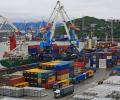
India's merchandise exports increased by 19.63 per cent to USD 44.24 billion in July, primarily driven by petroleum products, while a significant rise in imports pushed the trade deficit to a six-month high of USD 31.98 billion.

India's top centrally-contracted cricketers, including Ravindra Jadeja, Rishabh Pant, and Yashasvi Jaiswal, underwent mandatory fitness tests at the Centre of Excellence in Bengaluru. These assessments, featuring the Bronco Test, 2k run, and YoYo test, are crucial for the upcoming eight-month home season, which includes series against Afghanistan and West Indies, and the Asian Games.

India's head coach Gautam Gambhir indicated that top batters might be rested from white-ball cricket to prepare for Tests during the upcoming New Zealand tour. He emphasised the importance of Test cricket, the challenge of multi-format players, and discussed preparations for the 2027 World Cup, highlighting the crucial roles of Hardik Pandya and Jasprit Bumrah, and praising Shubman Gill's captaincy.

The BRICS summit in New Delhi brings together leaders from major emerging economies to address global challenges like trade disputes, geopolitical upheavals, and the economic impact of conflicts in Ukraine and West Asia. India, as chair, aims to position BRICS as an economic growth engine, focusing on the Global South's food, energy, and supply chain security. The summit also highlights the grouping's expansion and its growing influence in global governance.

Chinese President Xi Jinping's upcoming visit to India for the BRICS summit is a pivotal diplomatic event poised to significantly impact bilateral ties and global cooperation amidst ongoing international instability.
The Indian rupee is highly vulnerable among Asian currencies, with Barclays and MUFG warning of a potential depreciation towards 100/$ if the West Asia conflict persists, driven by widening current account deficits and elevated crude oil prices.

A report by Scholars at Risk, 'Free to Think 2026', states that academic freedom in India is "severely restricted" due to increasing government influence over higher education, university governance, and curbs on student expression. India is listed among six countries in this category, with its Academic Freedom Index score sharply declining. The report cites instances of faculty dismissals, event cancellations, and pressure on student protests, highlighting the alleged use of the UGC as a vehicle for state influence.

Deepadhar, featuring former Asian Games gold medallists, has taken an early lead in the fifth East Zone Bridge Championship in Kolkata, accumulating 65.22 Victory Points after four rounds. The tournament, a Bridge Federation of India Ranking Two event, involves around 300 players from 50 teams across East Zone states competing for a Rs 6 lakh prize purse, with the top 16 teams advancing to the knockout stage.

India's first Asian Games gold-winning heptathlete, Swapna Barman, has been provisionally suspended by NADA after testing positive for the banned substance Boldenone. This disciplinary action proceeds despite her recent retirement announcement. The case highlights ongoing efforts to combat doping in Indian sports, with other athletes also facing bans.

Prime Minister Narendra Modi spoke with Iranian President Masoud Pezeshkian to discuss the escalating tensions in West Asia, emphasising the safety of Indian nationals and the need for regional stability through dialogue and diplomacy.
Indian benchmark indices Sensex and Nifty experienced volatility due to conflicting developments in West Asia, including reports of the Strait of Hormuz closure, which led to a rebound in crude oil prices and heightened investor concerns about supply disruptions and inflation.
Indian benchmark indices, Sensex and Nifty, experienced significant declines, with the Sensex falling 493 points and the Nifty dropping for the sixth consecutive day, primarily due to elevated crude oil prices reaching USD 91 per barrel and diminishing hopes for a diplomatic resolution in West Asia.

Former West Indies cricketer Ian Bishop hailed Bangladesh's "momentous achievement" after their stunning nine-wicket win over Australia in the first Test in Darwin on Sunday.

Pakistan's interim red-ball head coach Mike Hesson has distanced himself from the decision to drop senior players Mohammad Rizwan, Salman Agha, and Imam-ul-Haq from the Test squad, stating they were already released when he took charge.

Indian stock markets ended a five-day losing streak, with the Sensex surging 776 points and the Nifty gaining 228 points, driven by a significant drop in crude oil prices and easing geopolitical tensions in West Asia.

The Asian Development Bank (ADB) has revised down India's GDP growth forecast for fiscal year 2026-27 (FY27) to 6.6 per cent from an earlier 6.9 per cent, primarily attributing the change to elevated energy prices stemming from the Middle East conflict. Despite this moderation, India is still expected to remain the world's fastest-growing major economy.

The 2026 Asian Senior Weightlifting Championships, featuring participants from approximately 30 nations, commenced in Gandhinagar, highlighting India's growing role in international sports.

Indian refiners are recalibrating their crude sourcing strategy due to supply disruptions in West Asia, leading to Venezuela and Brazil emerging as top five suppliers in April, replacing traditional sources like Iraq and the United States.

Mirabai Chanu will miss the Asian Championships due to a shoulder injury sustained during the National Championships. Komal Kohar is expected to replace her in the Indian team.

Even if there is an early agreement on a cessation of hostilities in West Asia, the price shock will not go away easily, points out A K Bhattacharya.

The Indian government has defended its E20 ethanol blending programme, stating that extensive testing and field experience show no evidence of abnormal engine wear, corrosion, or reduced vehicle life, despite a potential 2-6% reduction in fuel economy.
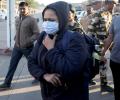
Deportations of Indians have increased in recent years from several countries like the UAE, USA, Malaysia, Myanmar.

On World Elephant Day, the story of Parbati Barua deserves to be remembered.

Indian benchmark indices, Sensex and Nifty, closed almost flat in choppy trade as investors remained cautious due to ongoing uncertainty in West Asia, relentless foreign fund outflows, and anticipation of the RBI's monetary policy decision.

'One important clarification is that the reported US action is not a blanket cancellation of all US tourist visas.'

Tilak Varma is emerging as India's potential middle-order backup, offering left-handed batting variety and developing off-spin as selectors seek younger, flexible options ahead of the ODI World Cup.

India and China are in what experts call 'a cooperation-versus-competition situation'.

Indian benchmark indices Sensex and Nifty experienced a significant slump in early trade, mirroring weak global trends, as escalating tensions in West Asia, particularly a drone attack on the UAE's Barakah nuclear facility, pushed crude oil prices higher. Track Sensex, Nifty50 movement and key market drivers for May 18, 2026.

Nepal's devastating flash floods have claimed 1,127 lives, with thousands still missing a week after the disaster. Rescuers are intensifying efforts to find survivors and recover bodies across affected regions, while police work to identify victims and relocate families from high-risk areas.

The Sri Lankan government attributes the sharp depreciation of the rupee against the US dollar to the ongoing conflict in West Asia, citing increased costs for essential imports like gas, fertiliser, and oil.

China sailed through the crisis in the Strait of Hormuz relatively unscathed even as the impact of its steps shielded other consuming nations from having to pay high crude oil prices.

Indian equity markets experienced a significant downturn as geopolitical tensions in West Asia, rising oil prices, and foreign fund outflows dampened investor confidence. The Sensex and Nifty both fell sharply in early trade, reflecting broader global market weakness.
